![Commonwealth Marine Economies Programme [logo]](/themes/cmeprogramme-NOC8X/logo.svg)
CAMEL Capabilities, Equipment and Specification
Find out more about the CAMEL Capabilities, Equipment and Specification.
The capacity of many Small Island Developing States to conduct marine scientific research within their extended economic zones is limited by the fact that they cannot afford to design, build and operate the research vessels required to achieve the necessary geographic coverage or sampling rate. In order to address this limitation and provide beneficiary countries and remote areas with access to state-of-the-art scientific equipment, this project supported the development and deployment of the Containerised Autonomous Mariane Environmental Laboratory (CAMEL) – a fully containerised facility housing autonomous systems that can be used to map and monitor marine environments which can be shipped to any port and deployed from a quayside, beach or vessel.
The CAMEL facility comprises multiple innovations that enable marine scientific research and hydrographic surveying in remote and/or unsupported locations. One of the principal assets is the autonomous (unnmaned) surface vessel (USV) that has three separate payloads (Hydrographic; Oceanographic and Geophysical) for subsea scientific data collection. In addition the facility includes two 20-foot (20’) ISO containers that function as an Operations Room and a Workshop during a deployment, a portable Remotely Operated Vehicle (ROV), a micro autonomous underwater vehicle (AUV), a wave measuring buoy with GPS, a sound velocity profiler and an inflatable boat with outboard engine. Full details on the capabilities of the facility and equipment specifications are provided here.
To date, the CAMEL Facility has been successfully deployed for scientific data collection twice in Belize (in 2018 and 2019), and once in Dominica (in 2019). The deployments in Belize provided vital information quantifying the impact of land use change on coastal marine environments, and supported related work on ocean acidification, coral health and carbon capture by natural ecosystems. The deployment in Dominica enabled new marine habitat maps to be produced for two protected marine areas.
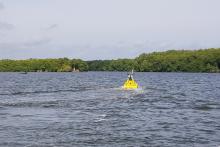
Scientists and engineers from the National Oceanography Centre (NOC)…

A month long fieldwork campaign has begun in Belizean coastal waters which will enhance understanding of the sensitivities of these fragile environments to the impacts of both human activities and…
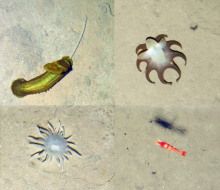
A study led by National Oceanography Centre (NOC) scientists, recently published in Frontiers in Marine Science, presents the first ever images of animals living below…